Skerton Weir.
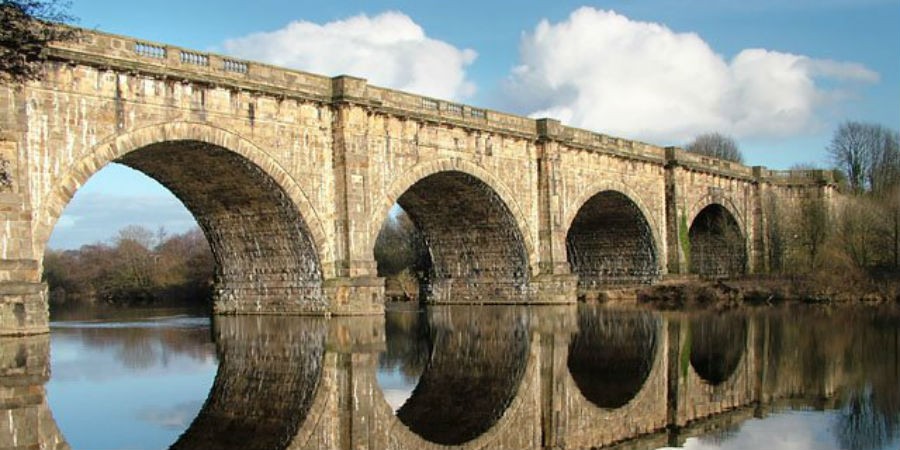
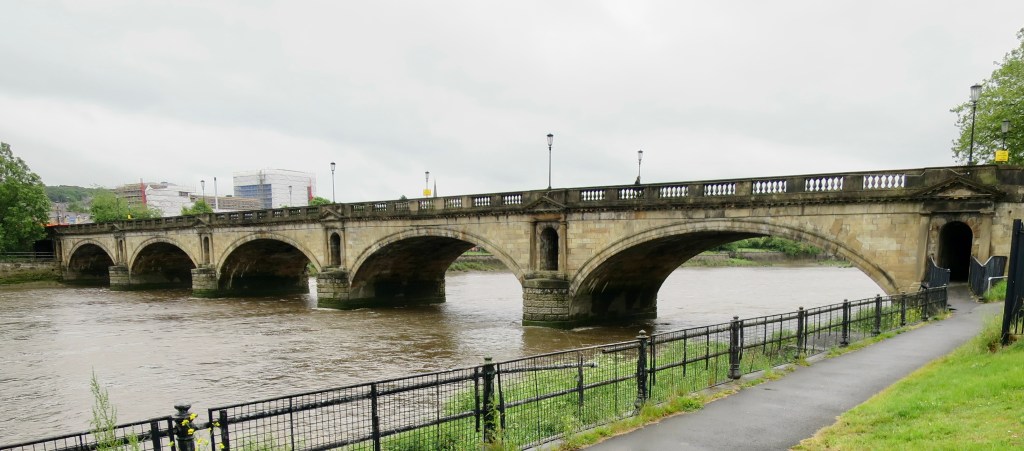
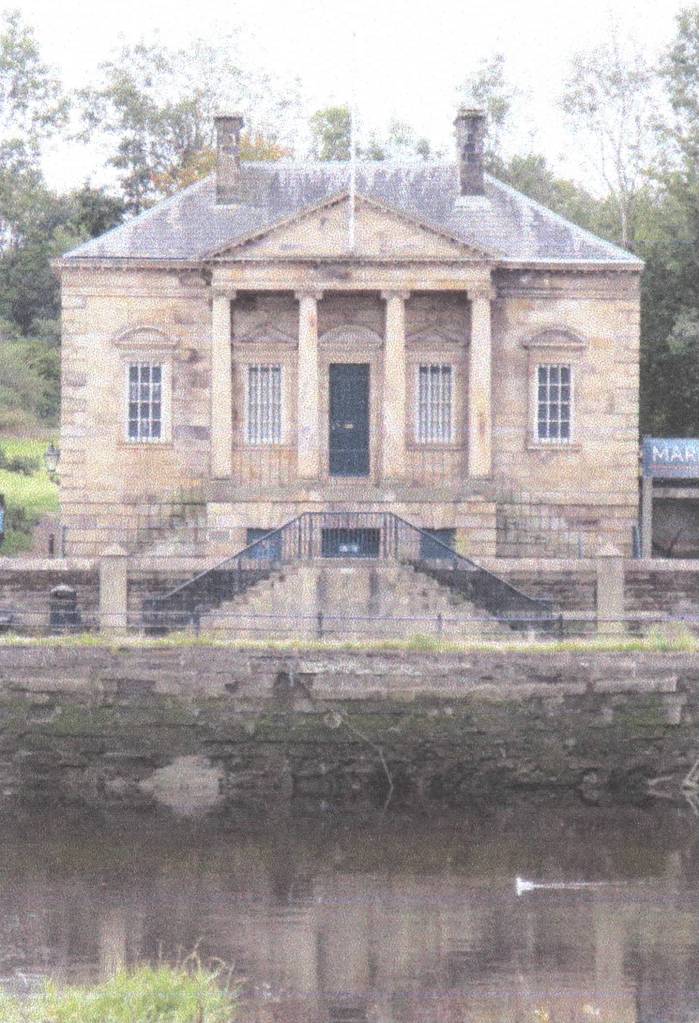
The last weir on the Lune is at Skerton, between John Rennie’s aqueduct (1797) [Lancaster Letter 23], and Thomas Harrison’s Skerton Bridge (1788) [Lancaster Letter 7].
Built to power a corn mill, the weir created a two mile lake between it and the next weir upstream, at Halton. William Bradshaw objected to the building of the aqueduct, fearing it would affect his salmon and trout fishing. But built it was. The ‘lake’ has been a popular rowing venue since 1842, used by the John O’Gaunt Rowing Club (founded by architecture partners Sharpe and Paley), Lancaster Grammar School from 1948, and Lancaster University from 1964.
Skerton weir is the boundary between river and estuary. Although the corn mill was demolished in 1950s, the weir continued as a popular place of relaxation and play: to sit beside its pond-stillness and patterned cascade, to swim placidly or racily behind, walk adventurously along, slide riskily down, fish from, it was a place of informal gathering, social experience, rites of passage, where local kids did their growing up. Skerton beach.
It was rebuilt in 1970s, “a nasty piece of engineering”, “extremely dangerous”, “lethal at high tide”, definitively separating two worlds, of Environment Agency and Port Commissioners, crossed only by diminishing numbers of salmon and the occasional errant jet skier. No one now goes near it.
The average water level is 3 feet. At 12:15am, 6 December, 2015, it rose to 13 feet. A foot of rain had fallen upstream, in 24 hours, and the flow was the highest ever recorded on a UK river. Storm Desmond. The rowing club’s boathouse was flooded to first floor level, and many boats destroyed.
On the opposite bank 16 herons stand in a row, like grey and white umbrellas stuck in at the points. Sometimes grooming, the occasional wing adjustment, but mostly standing still, as if time does not exist. In the trees above 20 cormorants, black as absence. They pass my window each morning, heading for the sea, flying fast, eager commuters out to feeding grounds.
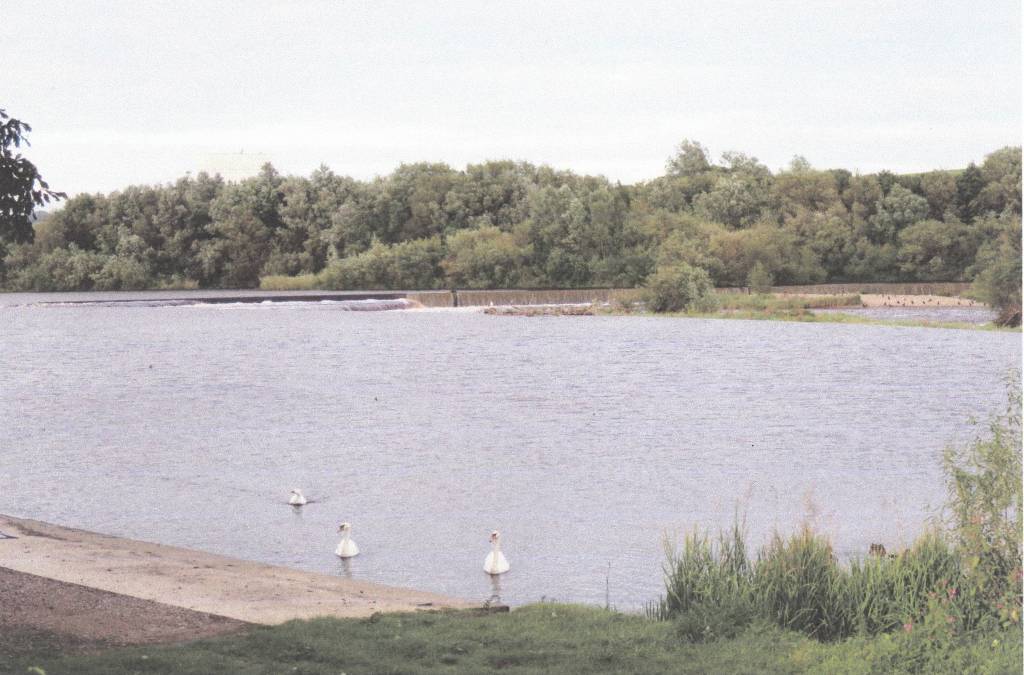
This evening the swans float perfectly reflected. Long ago, when everything was taken for granted, and, looking back, everything had significance, I watched one take off, and ‘a door open as it passed from a small dark room into a golden world of limitless possibility.’ [Lancaster Letter 13.]
By Harrison’s Bridge.
I am walking by the river hand in hand with Angela. It is 3am. We’ve just got off, at Skerton bridge, the bus from the Friday night dance at the Floral Hall in Morecambe. I went there with my brother, the only time, for we inhabit different worlds. He introduced me to Brenda and Angela, bouffant hair, petticoated dresses, stiletto heels. I danced with Angela, as I’ve never danced, before or since. She sparkled on the dance floor, as if illuminated by the spinning mirror ball, light on her lightning feet, turning and swaying in perfect balance, leading all the time while moving backwards and appearing to be led, avoiding my mistakes adroitly and turning my errors into stylish moves, navigating us around the dance floor and between shuffling couples unerringly, around and around in a breathless whirl, as the music stops a big smile. She is a burler and mender, a skilled trade.
The guest group was the Beatles. In two weeks they will release “Love Me Do”, and change music. In two weeks I will go to university, and my life will change.
My brother has shown me the panther he carved from a mahogany bannister. It took my breath away. The curved surfaces I had to follow with the touch of the prints of my fingers, the muscled limbs tensed for action, the backbone taut as a bow, sinuous as a snake: motion stilled, distilled. A frame from a film; and the whole film in that frame. Ferocity caged, and yet innocent energy; vitality trapped, and yet freedom expressed. He should go to art school. At Christmas he will get engaged to Brenda and continue as a joiner, an excellent tradesman.
I am walking with Angela, by Harrison’s bridge, over the memory of the cottages they demolished to build the flats – Wimpey’s contribution to the International Style. ‘More is less’, commented my art teacher.
‘My Nan had one of the cottages,’ Angela says. ‘Just here.’ She stops, looks down at absence, looks out across the river. ‘I loved the river. Always different. We girls’d wade over when it was low, like now, skirts tucked in our knickers, for a dare, getting shouted at from the bridge, birds on the islands, sea birds I suppose, black and white, darting movements, long pink legs and sharp red beaks, as if they’d been rummaging in a corpse, we’d scare each other, ‘look out, you’re going to step in it!’ Next week the river full, fast, like sliding lead, hardly getting under the bridge, going round the bend like a racing car, carrying tree trunks like battering rams, birds perched on them. Expecting to see houses with people clinging to the chimneys, “help! help!” like at the pictures.
‘Sometimes it’d come through the cottage. In through the front, out through the back. Never deep. We’d sweep it through, no lino, Nan quite liked it, “keeps the flags clean,” she’d say. Broke her heart when they moved her into the new flats. Tenth floor.
‘I move in with her – dad trouble. She didn’t live long. On my own. Fourteen. Waking from dreams, looking out at – no for – the river. Once, just once, in that luminous moment of just waking, I caught it full to the brim, still as glass, in the deepest silence of the night, at the moment it arrived at its highest point, like a breath held; before it let go, the beginning of its long flow out. I imagined myself lying on it, looking up at the full moon, being carried away to … Just once.’ Her voice far away. Her hand warm. We walk on.
Living by the River.
I returned after fifty years away and, having lived for thirty years in a town on a riverless green summit, I bought a house by the river.
The river is ever present. It is a few yards away, beyond a narrow grassy bank, the berm that kept Storm Desmond from flooding – just – this side of the river. (The other side did flood, including an electricity substation, blacking out half of Lancaster for days.)
I witness its changes, hour by hour, minute by minute.
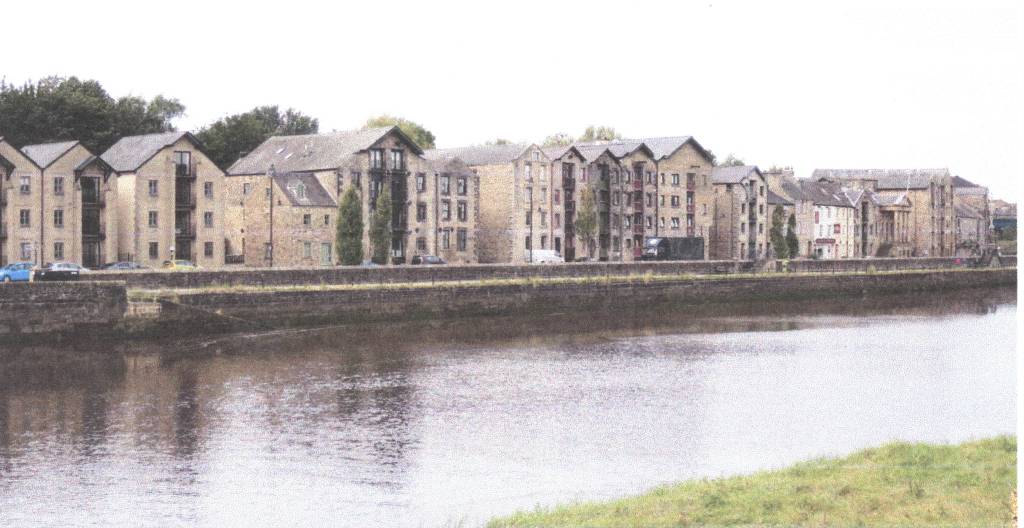
It is a wide river. A hundred yards here. The bridge is on the left. To the right the river sweeps in a wide curve, under Greyhound Bridge (the old railway to Morecambe, now a road bridge) and the Millennium pedestrian bridge, round along the Quay of tall stone warehouses and the Customs House, the source of Lancaster’s first wealth, the West Indies trade, and the trade in enslaved Africans. Lancaster was Britain’s fourth most important slaving port.
And it is a big river, with a thirty-feet tide range, second only to the Severn. In six hours and a few minutes the sea at the mouth of the river rises thirty feet. Five feet an hour. No wonder the cockle-pickers in the Bay got caught, stage coaches crossing the Sands were sometimes overwhelmed, coming in as it does at faster than walking pace. It rises and falls less here, three miles from the sea. But still, having let down my plumb line, spinning slowly, from the quayside, to touch the oozy mud of low tide, and measured its length, I find it is twenty feet, from low water to the quayside that the highest tides overtop.
At night, when I wake between dreams, I go to the window and look out at the river. My one certainty. The bridge lights are shimmering fragments on its surface. Sometimes the river is low, running out in rippling ribbons fast between shining mudbanks and gravel skears. Sometimes it is around midpoint, surging tidally in. Once I caught it, full to the brim, placid as a pond, in the silence of deepest night, at the moment of its arrival at its highest point, a moment of suspension, like the catch in a breath … before, moon bidden, it began its long letting go, down to its low, the null point, the moment before the return. Immense forces. Huge masses of water moving. Being moved. Tides. The river is the Lune. Moon in French.
Lancaster and the Slave Trade.
By Skerton Bridge is a green space, with a skateboard park. Downstream, by Carlisle Bridge is a new residential and industrial estate. Between them is the heart of Lancaster, and the story and complex legacy of the town and the trade in enslaved Africans.
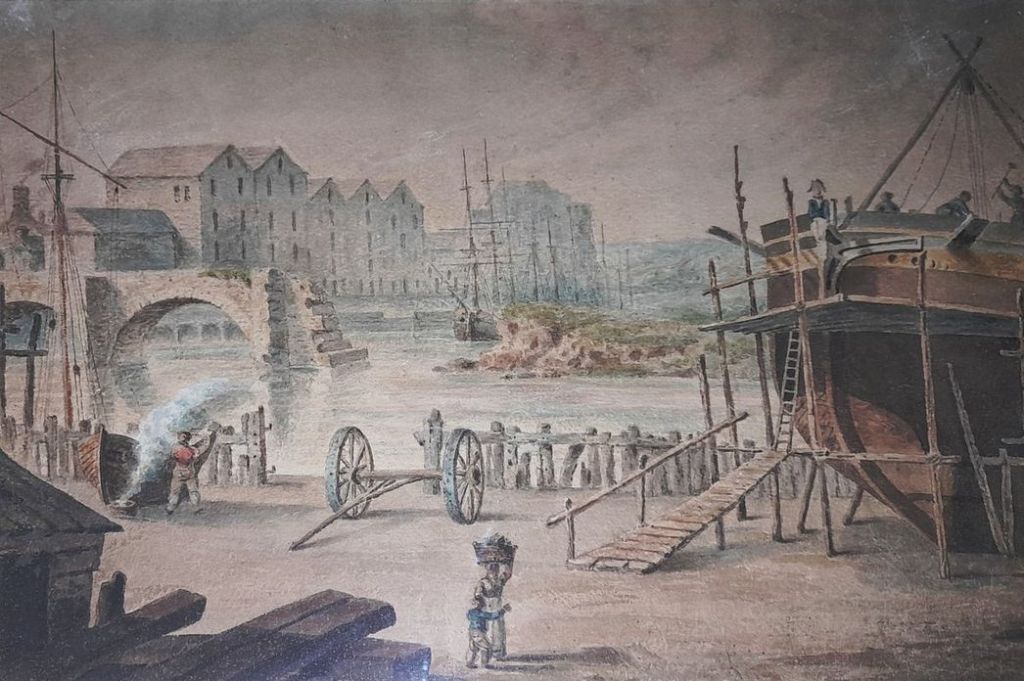
In the eighteenth-century the green space was the site of Brockbank, shipbuilders, who built ships custom-made for the Lancaster slave trade, smaller than Liverpool ships, as they picked up Africans on the difficult Guinea coast. On the new estate, several of the new streets are named after Brockbank slave ships. There is also a Brockbank Avenue. Not intentionally offensive, but the result of the lack of openness about the detail of Lancaster’s economy, and the cognitive dissonance this allows, requires, creates [Lancaster Letter 15].
Lancaster was the fourth largest UK slaving port. There were 200 sailings to Africa, and 30,000 Africans were transported across the Atlantic, 4,000 dying on the passage. As the trade developed from Liverpool – which quickly surpassed London and Bristol – enterprising sons of Lancaster moved there. There were also many direct sailings between Lancaster and the Caribbean, with furniture and luxury goods for the plantation holders, machinery, clothes, ironwork, dried fish for the plantations and slaves, bringing back sugar, rum, spices and mahogany. Fifty per cent of the town’s trade was with the West Indies, with additional trade with the slave states of North America. The first bale of American cotton was said to have been landed at Lancaster’s outport of Sunderland Point. Shipbuilding and furniture-making were the two main trades in Lancaster.
Lancaster men also owned plantations directly, and their sons became factors and supervisors in Africa and the Caribbean. Their families became wealthy, built substantial warehouses and fine houses, furnished them with mahogany furniture [Lancaster Letter 15], and dominated the town council, the Port Commission, and local society for generations. (The Port Commission was set up in 1759 by the local slave traders to improve port facilities.) “The wealth derived from slavery and slave ownership in Lancaster shaped the establishment of a new class of powerful elites in England.” Prof. Imogen Tyler. And the wealth was directed into investment in the canals and manufactories of the Industrial Revolution.
But these generalities have been known for thirty years [Lancaster Letter 15], and acknowledged in the city museums’ displays. And yet still the ignorance that results in streets on a new estate being named after slave ships. Perhaps some details need to be more widely known.
For example: Miles Barber of Skerton (where I live) developed on the Guinea coast ‘Factory Island’, and eleven barracoons where Africans in thousands were imprisoned in horrific conditions before being herded onto slave ships. It was the biggest such operation on the coast. He was a Lancaster Port Commissioner in 1860s.
For example, Barber employed the Hodgson brothers of Caton, who took over the running of Factory Island. They used the money they made on the Guinea coast to set up the first cotton mill in this area, in their home village, five miles from Lancaster. The mill used children from Liverpool orphanages and workhouses as cheap indentured labour –“the small and nimble fingers of children” were essential for the efficient use of early cotton machinery, noted a 1797 report. The children were locked in dormitories between their 12-hour shifts.
For example, John Bond owned Lancaster plantation in Guiana (Guyana), described in 1785 as “distinguished” by “its inhuman treatment of slaves”. In 1837 his son received £29,000 – almost £3 million today – from the Slave Compensation Act, for the loss of his ‘property’. The slaves received nothing.
For example, the Satterthwaite family, a prosperous Lancaster slave-trading family, had a black servant, Frances Elizabeth Johnson. Her grave bears one date, that of her baptism. After her death, her hand was cut off and preserved in the family, as a memento of her service. As the paw of a favourite dog was often preserved in that period. The hand was finally buried in 1997.
For example, Gillows of Lancaster was a nationally renowned maker of high-quality furniture for 200 years. It was founded by Richard Gillow, who sailed to Barbados as ship’s carpenter in a Satterthwaite slave ship, and returned with the first mahogany in 1720. The company imported slave-produced mahogany, and sold furniture to the plantation owners and local slave traders. Dickens, a frequent visitor to the King’s Arms hotel, writes of old mahogany’s “retrospective mirror quality, in the depth of its grain, showing the hue of the wretched slaves who groaned long ago under the old Lancaster merchants.” Richard’s son, Robert designed one of Lancaster’s finest buildings, the Customs House, on the Quay, and continued the business.
For example, after slavery was abolished across the British Empire in 1833, The Slavery Compensation Act 1837 paid £20 million – £2.4 billion at today’s prices, the largest ever government payout – to 40,000 owners of 800,000 slaves. Over a dozen local families benefited. The money fuelled the Railway Mania of 1840s as the beneficiaries sought replacement income.
But there are signs of change.
Research at the universities of Lancashire and Lancaster, led by Alan Rice and Imogen Tyler, is revealing more and more local detail.
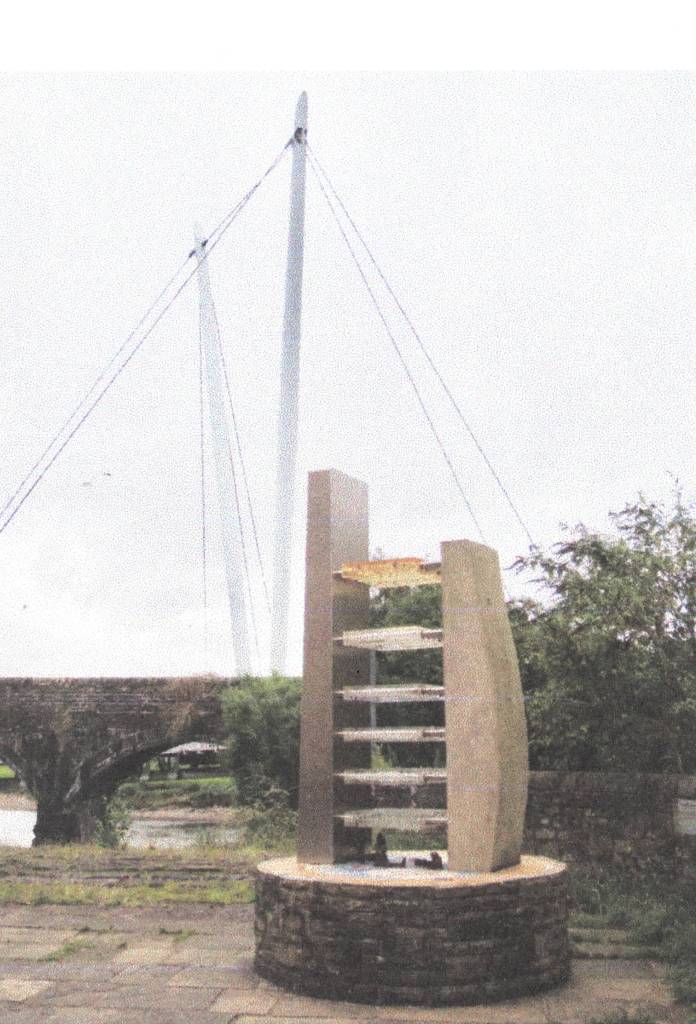
In 2005, the Slave Trade Arts Memorial Project secured the commissioning of “Captured Africans” by Kevin Dalton Johnson, still the only quayside-located monument to transported Africans in UK, and a focus for ‘Black Lives Matter’ demonstrations.
‘Black Lives Matter’ demonstrations were held in Dalton Square, where John Bond lived.

The Rawlinson grave, the most elaborate in the Priory churchyard, was tagged ‘Slave Trader’. The vicar said that while he couldn’t approve the action, he acknowledged its truth, and the need for the church to be more open. (Clergy received an equivalent of £46m from the compensation payout.)
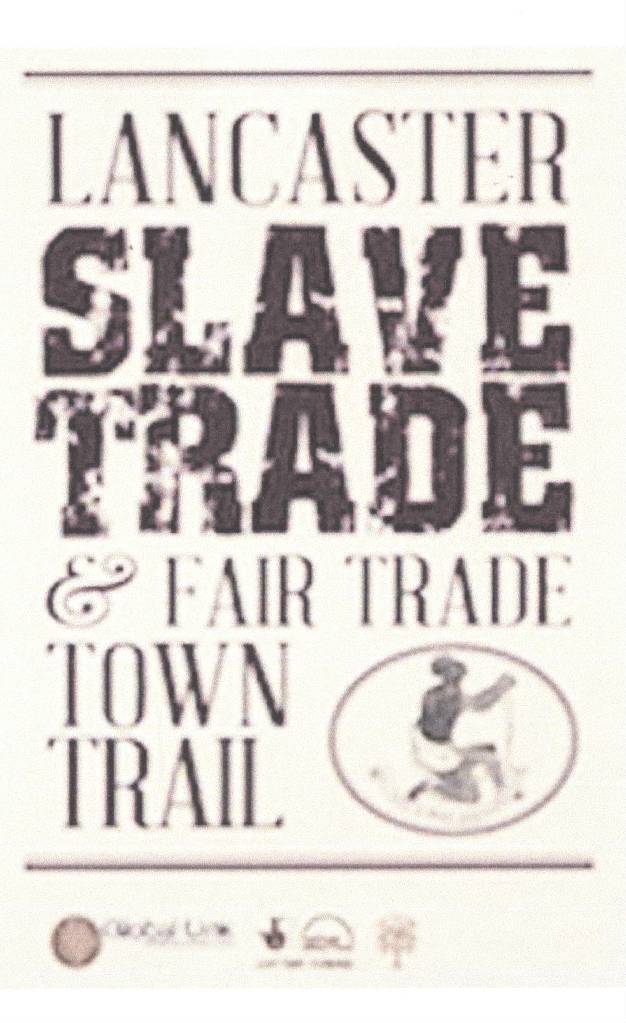
A “Slave Trade and Fair Trade Map of Lancaster” has been produced, and recently updated, giving a route from the past of slave trading to the future of fair trading.
The City Council, the Priory Church, and the local museums have promised to revisit their public spaces and displays to take better account of Lancaster and the slave trade.
Professor Tyler has connected the Lancaster Assizes, sending branded and chained convicts to forced labour in the Caribbean and North America, with the slave and plantation system, and the investments from slaving profits in child-exploiting cotton mills (as at Caton), and their use of slave-produced cotton.
And perhaps I have to continue the connections, to arrive at my personal responsibility: to the post-war mass-import of sub-continent workers to East Lancashire mills, then their abandonment when the industry was off-shored, resulting in racial tensions. And further, to exploitative third-world conditions producing clothes I buy without thought. Or to sweat-shops in Leicester, and the ‘fast-fashion’ of synthetic fabric clothes, effectively one-use plastics. And maybe I need to follow all such connections, to what I consume and how I live.
Wiiliamson’s.
Below the last bridge (Carlisle Bridge, carrying the West Coast railway line) was:
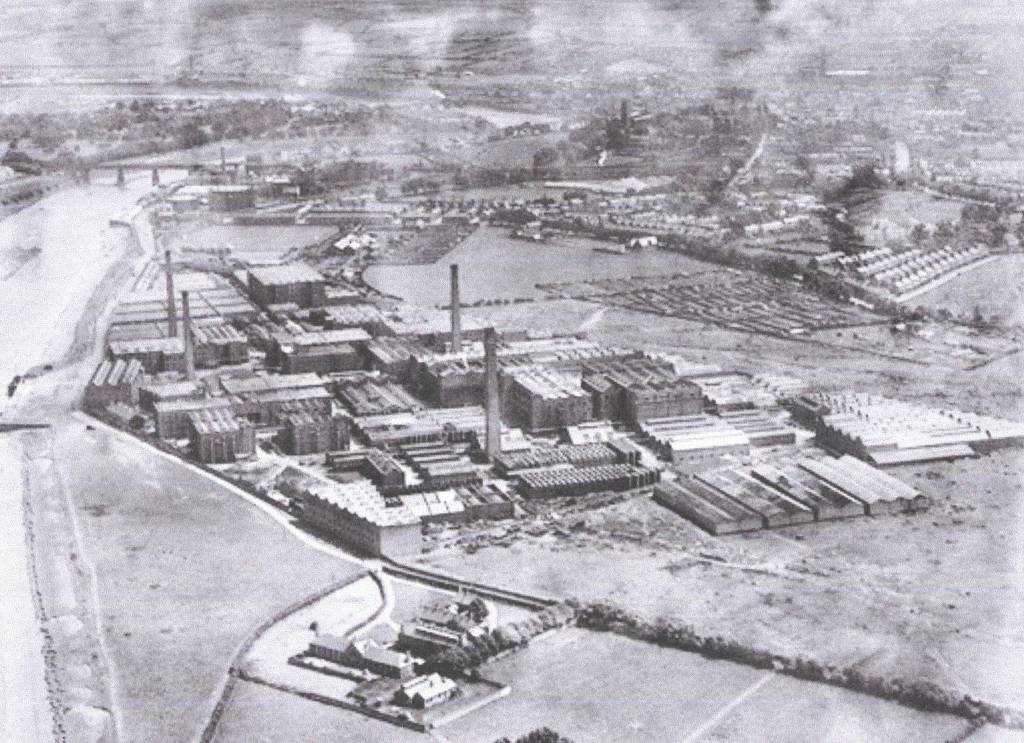
“the largest manufactory of its class in the world; and further we may say, without any fear of contradiction, that the mammoth works on the banks of the Lune are the most extensive in the universe that are owned and controlled solely by one individual.”
The factory was Jas Williamson and Son: largely forgotten. Producing linoleum: now almost obsolete. The individual, James Williamson (the son), Baron Ashton. The second richest man in Britain. Today, outside Lancaster, hardly known.
The possessive, Williamson’s, applied not just to the company but to the town which he dominated for fifty years, and influenced for decades after his death.
From 1800 Lancaster stagnated, as maritime trade declined [Lancaster Letters 15, 18, 25], and the canal [Lancaster Letter 22] failed to connect the town to thriving south Lancashire. In 1800 the population was 11,000, when Oldham’s was 12,000; in 1861, 17,000 against 72,000.
And the town might have continued as a genteel market town, if it hadn’t been for the new industry of waterproof-coated fabrics – oilcloth, table-baize and linoleum, used as table and floor coverings. By 1911 the industry employed half the workers in a town that had grown to 41,000.
Table-baize was colourful, easy to maintain, and a step up from newspaper, without the expense and upkeep of linen.
Linoleum had a century run, from its invention in 1863 to its demise under the stiletto heel and the fitted carpet. Available in seasonally-updated colours and designs, in several qualities – and prices – it covered cold flags and draughty boards, carried a polish, and became a ready indicator of a household’s affluence, standard of housekeeping, and taste, as disposable incomes rose and ‘home furnishing’ became a mass market.
So great are the enigmas and paradoxes of James Williamson, ’Li’le Jimmy’, the diminutive trick-cyclist (the bicycle his passion) behind the high walls of his modest Skerton estate in the middle of the terraced houses of his workers, that in this first pass over a character I’m sure I’ll return to, I will simply list credits and debits in a preliminary accounting.
Born (1842) and educated in Lancaster, James took over his father’s thriving oilcloth business in 1879. Employment quickly doubled, then doubled again.
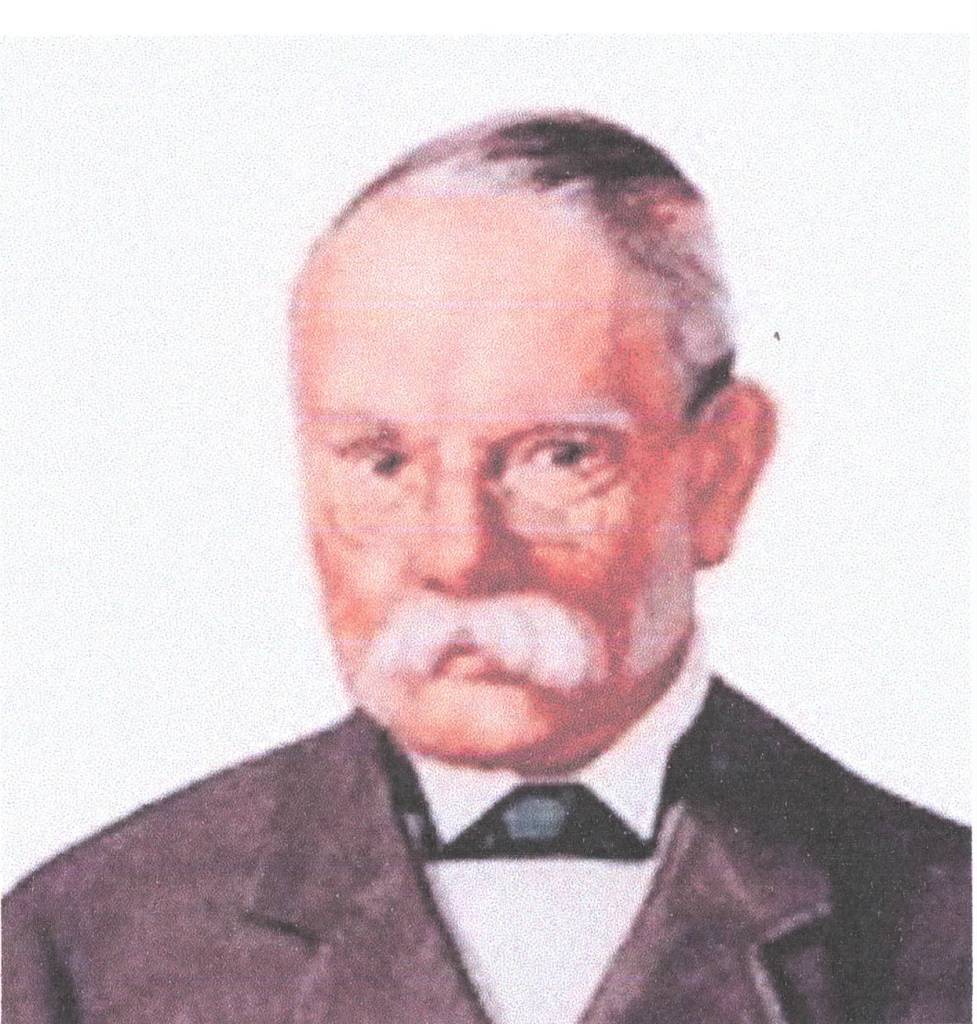
On one side. For the 4,000 it was a job for life. At a time before dole and pensions, he rarely laid men off in quiet times, and any employee, however old, who got himself in to the factory was paid a full day, even if he spent it leaning on a broom.
He gave generously to local hospitals, schools, churches, and sports clubs.
He bought out and cancelled the market dues, freeing up trade and reducing prices.
From his efficient office – where daily tallies of sales, orders and inventory were made – he planned the orderly development of his greenfield site by the river, with its own wharf and railway lines, space to expand and to store raw materials to weather price fluctuations.
And with his careful marketing strategies, he dominated for half a century the cheap linoleum trade in Britain, Europe, Australia and South America.
His financial support for Gladstone Liberals earned him the title Baron Ashton.
He developed Williamson Park, created by his father in old quarries above the town, gave it to the town, and paid for its upkeep.
He also paid for the town’s grand new town hall. And built, in the park, the Ashton Memorial, ‘England’s Taj Mahal’, for his late wife: Pevsner calls it ‘the grandest monument in England’.
He died in 1930, leaving over £900 million at today’s prices.
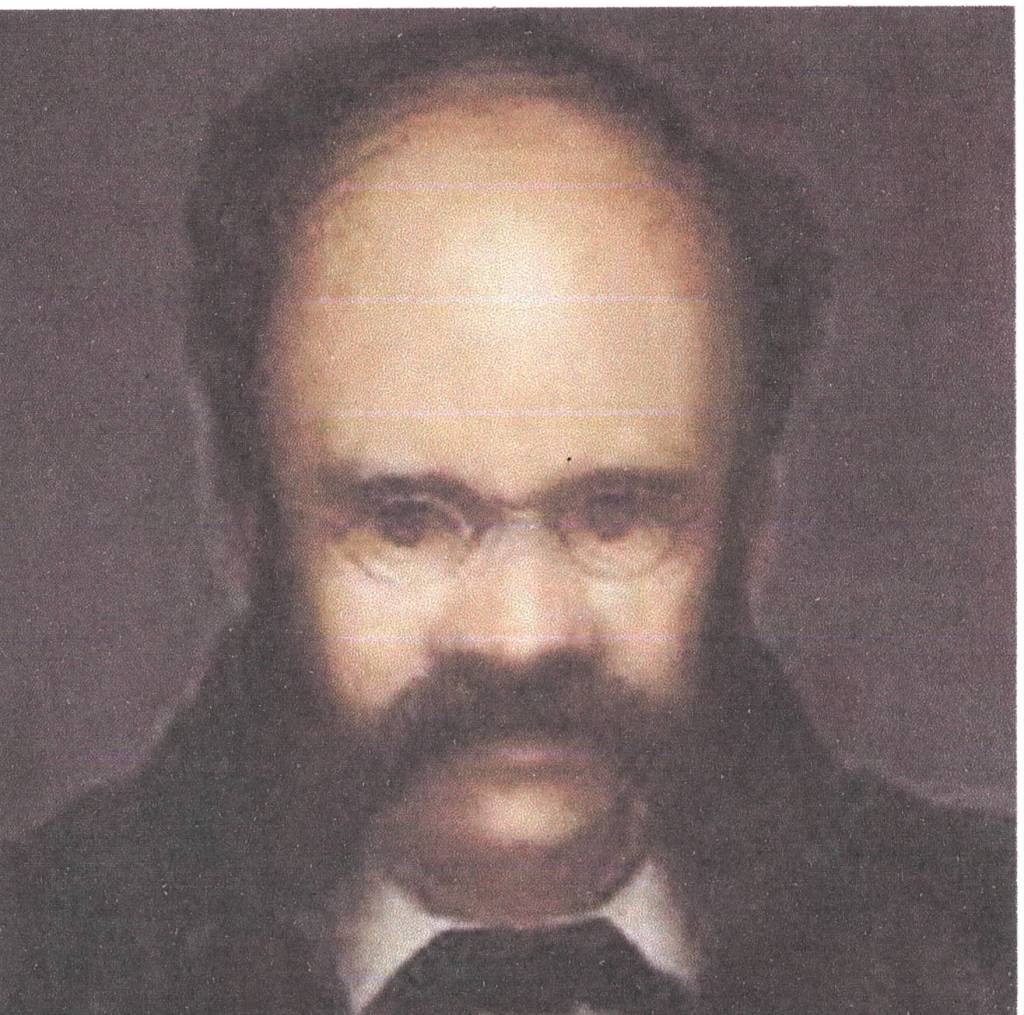
On the other side. He paid wages far below the industry rate, and below the industries of south Lancashire. Helped by Lancaster’s isolation (20 miles north of Preston), and wage-fixing agreements with other local businesses, especially Storeys, the other big employer, he kept wages low. A contemporary records: “those poor lads used to walk down the Quay looking half-starved, pale, and smelling of all that used to come off the lino.”
Fiercely anti-union, which he wouldn’t tolerate among process workers, he had to accept them in skilled trades. But the few times they struck, they were quietly ‘let go’ in the following weeks.
When an Independent Labour Party candidate almost won in Skerton ward (where he lived), he sacked all ILP members.
Anyone sacked by Williamson’s would never be employed again in Lancaster.
His ‘jobs for life’ policy was made easier because of the high turnover of workers. In 1914, hundreds quickly left to join the army. When women took their places, they soon left for the two munitions factories.
He ran a sophisticated intelligence system in which informants, ‘watchmen’, reported on conversations overheard in pubs, canteens and on the production line. Illustrated in the few reports that survived the wholesale destruction of all records – on his instructions – after his death.
It was still widely believed, when I was a child in 1950s, that he’d had a telescope trained on the works entrance, to check who was late.
The workers of the town were so cowed that after 1918 new companies (rayon-producers Lansil and Nelson) were attracted to the town by the low wage rates and non-unionised workforce. It lasted through to their closure in 1980.
Ashton died in 1930, intestate (the largest intestacy in British history), sole owner of the business and worth over £900 million at today’s prices. No bequests to loyal employees. No benefits to the town. There was no succession-planning. It was as if he could not imagine a world without him. His daughter inherited, but the main beneficiary was the state, in death duties. Imagine the benefit of even a small amount of that to the town.
The same for the Town Hall, overgrand for a town Lancaster’s size, and the absurdly functionless Memorial. (Pevsner: ‘the folly to end all follies’.) Together they cost £24 million at today’s prices. Again, imagine that money better spent. And compare his spending to that of a similarly-wealthy entrepreneur of the time, William Lever.
As to the Memorial being a ‘Taj Mahal’ for Jessy, his second wife, there’s no real evidence for this. It’s more a myth, based on the resemblance of the look to it. He had offered the Council a monument to Queen Victoria in the Park just before Jessy died. Immediately after her death he proposed instead a new ‘Structure’ in the Park, with no reference to Jessy. (The Victoria monument was built in Dalton Square, in front of the Town Hall.) I suggest, rather, that the death of his no-nonsense wife freed him to build a monument to, himself. There is no dedication to Jessy in it. By the time it was completed, he had married again. And his housekeeper reported that he followed its progress keenly through the telescope.
Although he disliked being photographed, and avoided personal publicity, there was an anonymous grandiosity about him. As in the quotation above, from a publicity article of 1894, which omits the name of this Uber-individual who “owned and controlled solely” this “mammoth works”, “the most extensive in the universe.”
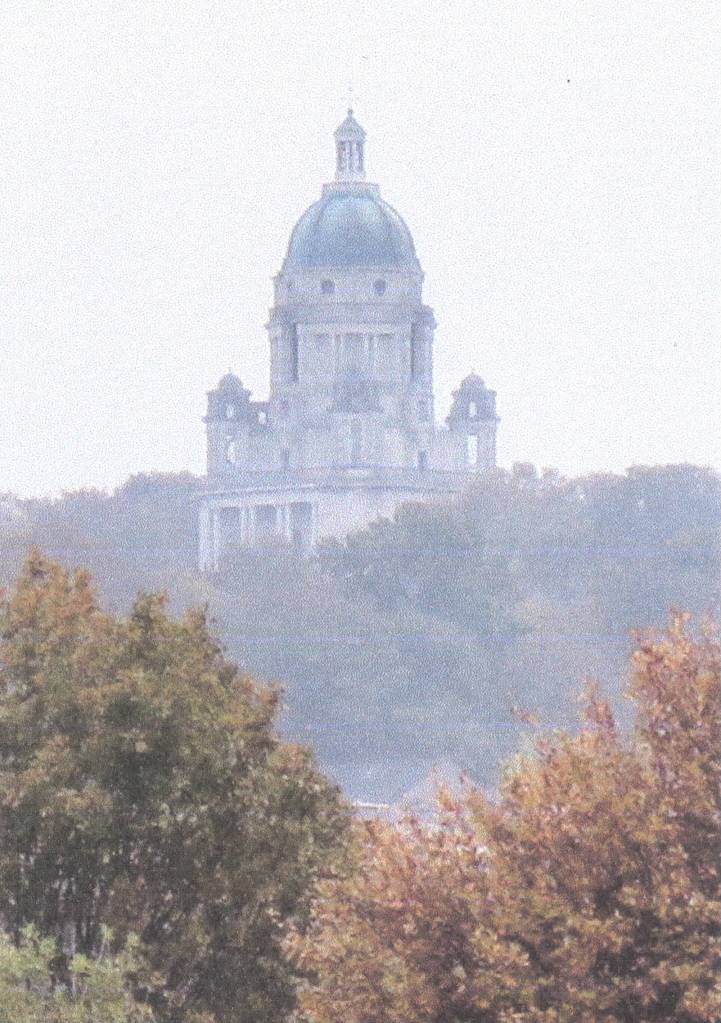
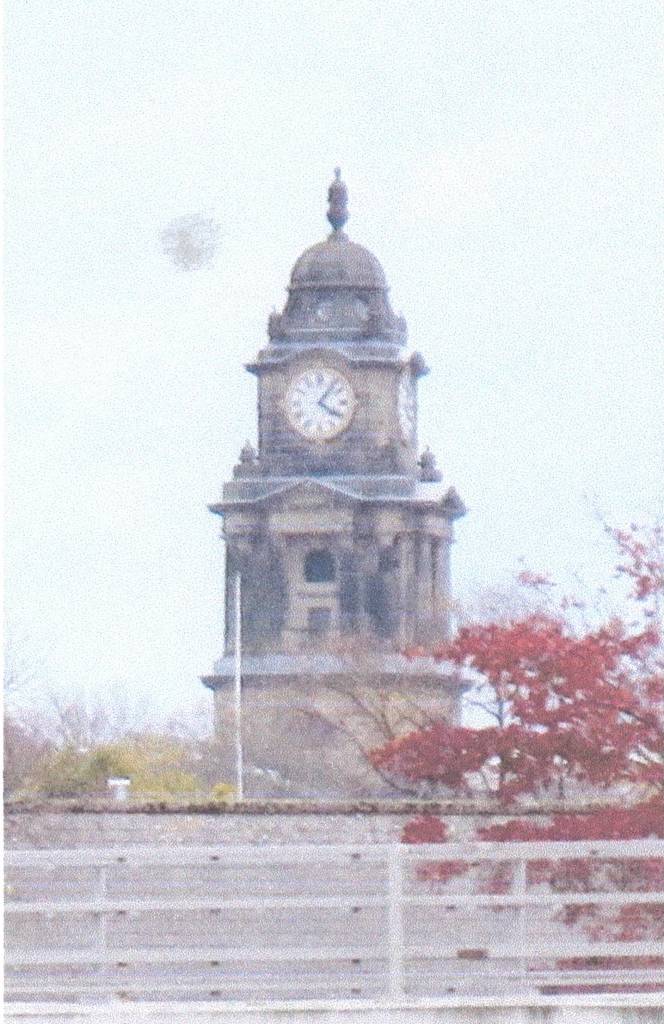
And, reconstructing the view from his house – a view now obscured by trees and buildings – it is interesting to see how clearly the Memorial and the Town Hall stand out.
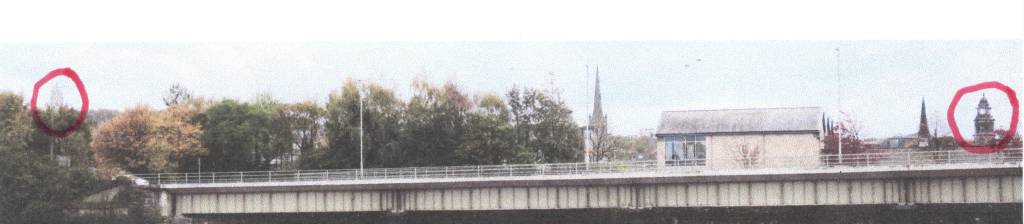
I imagine him, from his tower in Ryelands House, training his telescope first on the factory gate, and then on the edifices rising to celebrate – himself.
Acknowledgement: Almost all the facts about Williamson are from the comprehensive biography, Lord Linoleum, by Philip J Gooderson. The speculations are mine.
Water-skiing through Lancaster.
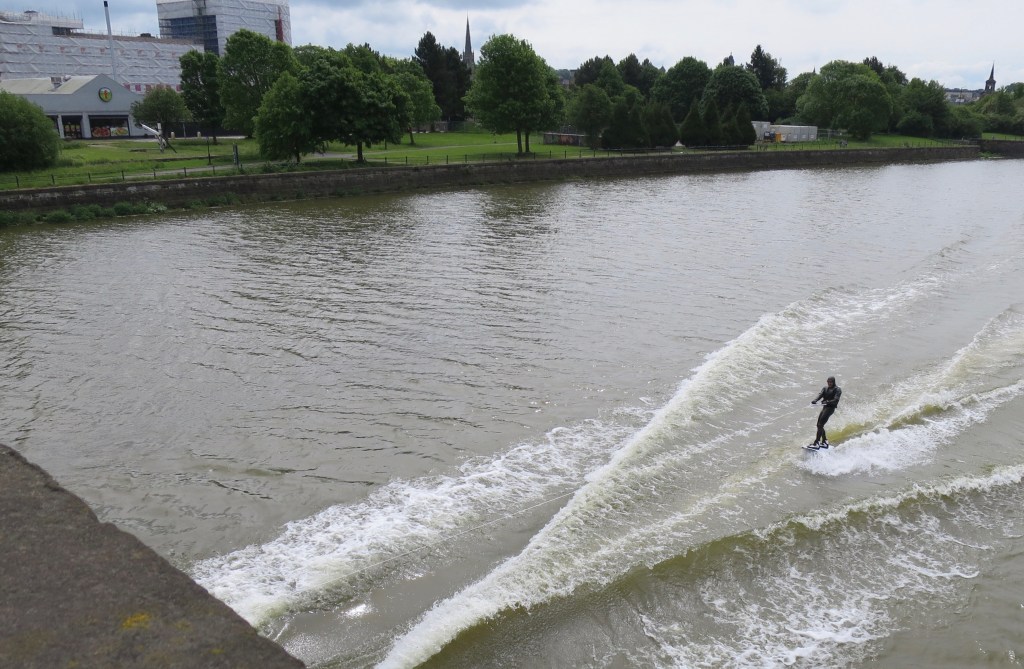
Bank holiday, high tide, I’m crossing Skerton Bridge, coming closer is the whine and roar of a high-revving engine … and from around the bend under Greyhound Bridge bursts a speeding motor boat, followed by a figure on a single ski slaloming back and forth across the wake, whooping, under the bridge below me, and round the bend upstream, towards Skerton weir.
I think of the kids in Les Amants du Pont Neuf joyously water-skiing through Paris. Except this skier, clad in a black skin-suit, looks more like a supervillain.
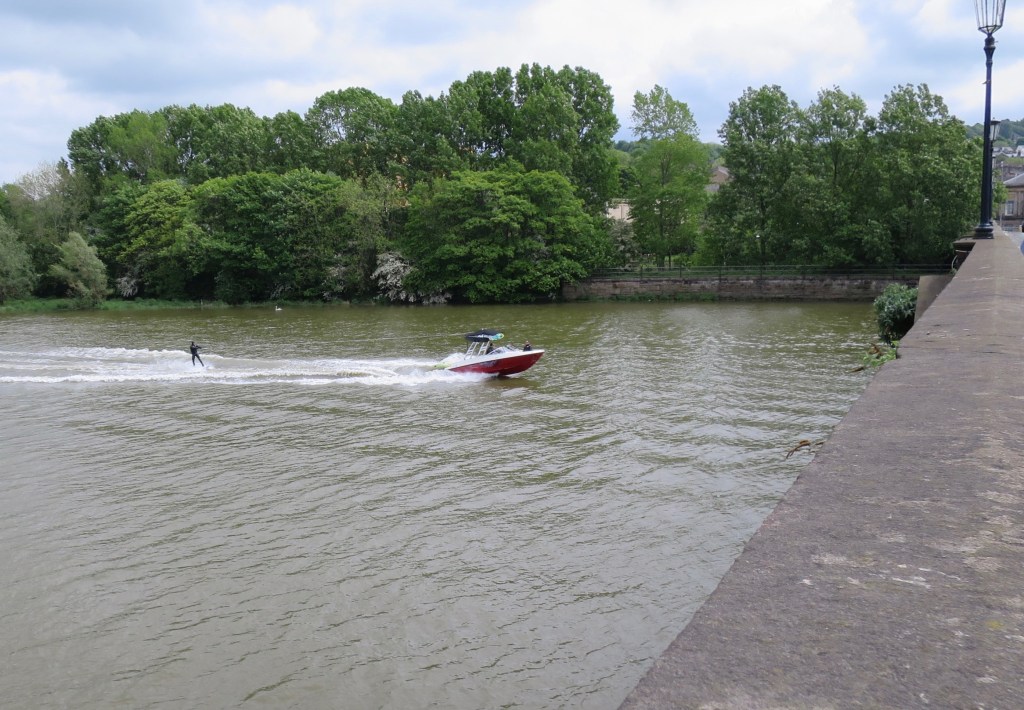
Ten minutes later he reappears, shoots under the bridge, heads, still whooping, downriver, towards the mouth of the Lune.

